
Examples of applying Generic AI in the learning activities of
your course
Table of Contents
1. Introduction
Below are two sets of AI options given.
First, 12 different types of AI options are given that you can use in the learning activities in your course.
Secondly, a proposal is given for how the assessment can be arranged when students are allowed to use AI in the course.
The list is prepared together with CoPilot. A cross-national synthesis (Europe – China – Indonesia – Malaysia).
2. You’ll find twelve types of AI applications that you can integrate into the learning activities of your course.
1. Text Analysis and Critical Evaluation
Where the AI idea is applied: AI generates comparison texts, summaries, or alternative formulations that students analyse for accuracy, bias, and coherence. The AI output functions as a contrasting reference point that students must verify, critique, and contextualise using academic sources.
AI Scavenger Hunt (VU Amsterdam)
Students compare multiple texts on the same topic, including an AI-generated text.
Focus: recognising AI-generated text, evaluating sources, and identifying bias and inaccuracies.
Reverse Engineering Prompts (VU Amsterdam)
Students receive an AI-generated text and reconstruct the prompt that could have produced it.
Focus: prompt engineering, understanding AI generation processes, and reproducibility.
AI-Supported Literature Exploration (NL & Malaysia)
Students use AI to create an initial topic overview, then verify claims with academic sources.
Focus: research skills, understanding limitations of AI summaries and academic transparency.

2. Argumentation, Debate, and Ethical Reflection
Where the AI idea is applied: AI produces arguments, counter‑arguments, or simulated stakeholder perspectives that students evaluate for quality, bias, and ethical implications. The AI output serves as a stimulus for deeper reasoning, structured debate, and ethical reflection.
AI-Supported Debate with Statements (VU Amsterdam)
Students generate arguments with AI and critically assess their quality and bias.
Focus: critical thinking, argumentation, ethical reasoning.
AI-Based Simulations (NL, China)
Students interact with AI-generated stakeholders (e.g., patients, policymakers).
Focus: applying theory to practice, decision-making and ethical reflection.

3. Feedback, Writing Support, and Formative Assessment
Where the AI idea is applied: AI provides draft feedback, structural suggestions, or language improvements that students assess, refine, and integrate into their revisions. The AI output supports iterative writing and strengthens students’ ability to judge the quality of feedback.
AI-Supported Peer Feedback (NL, Malaysia)
AI provides feedback on drafts; students evaluate and revise based on its suggestions.
Focus: feedback literacy, academic writing and critical evaluation of AI.
AI-Supported Academic Writing Labs (China)
AI gives structured feedback on argumentation and language; students compare it with peer feedback.
Focus: writing development, metacognition, quality control.
AI-Based Formative Assessment (Indonesia)
AI provides instant feedback on short essays; students validate it with real sources.
Focus: assessment literacy, verification skills and academic integrity.

4. Classroom Analytics and Interactive Teaching
Where the AI idea is applied: AI aggregates, clusters, or summarises student responses in real time, enabling rapid insight into collective understanding. The AI output serves as a diagnostic layer, informing both teachers’ decisions and students’ reflections during class.
The Group Analyser (Erasmus University Rotterdam)
AI summarises live student responses during class.
Focus: metacognition, interactive teaching, rapid feedback loops.
AI-Enhanced Classroom Analytics (China)
AI aggregates and visualises student responses at scale.
Focus: adaptive teaching, data-informed instruction

5. Creative and Design-Oriented Learning
Where the AI idea is applied: AI generates ideas, scenarios, constraints, or prototypes that students critique, adapt, and extend. The AI output functions as a creative catalyst, supporting divergent thinking, design iteration, and the evaluation of alternative solutions.
AI as a Brainstorming Partner (NL)
Students generate, refine, and evaluate ideas with AI.
Focus: divergent thinking, creativity, and idea evaluation.
AI-Generated PBL Scenarios (Malaysia)
AI creates realistic constraints and cases for problem-based learning.
Focus: scenario analysis, realism checks, problem-solving.
AI-Supported Entrepreneurship Labs (Indonesia)
AI helps generate business ideas; students assess their feasibility and ethical implications.
Focus: innovation, entrepreneurial reasoning, ethical reflection.

6.Learning Reflection and Metacognition
Where the AI idea is applied: AI is used to externalise and structure reflection, while students evaluate accuracy and completeness.
Guided Learning Reflection with AI (Europe, Netherlands)
Students use AI to summarise their own learning process based on drafts, feedback, or discussion notes, and then critically revise the summary.
Focus: metacognition, self-regulated learning, reflective writing.

7. Multilingual and Inclusive Academic Learning
Where the AI idea is applied: AI supports access to academic content, not interpretation or judgment.
Language Mediation and Concept Clarification (Europe, Malaysia, Indonesia)
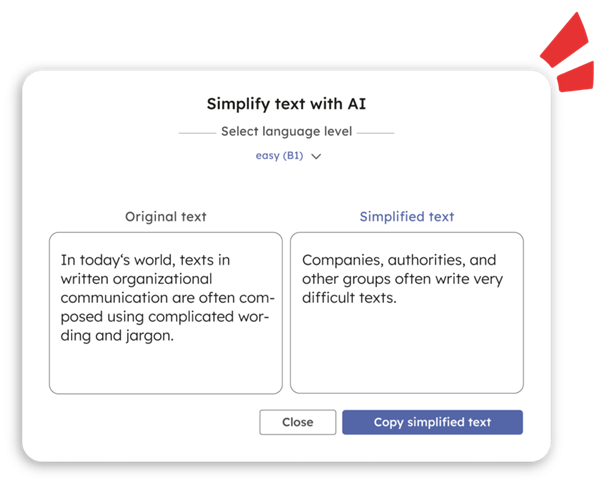
Students use AI to translate, simplify, or rephrase academic texts and compare versions to identify shifts in meaning or emphasis.
Focus: inclusivity, academic language development, epistemic awareness.
8. Data Interpretation and Verification
Where the AI idea is applied: AI simulates analytical outputs that students must validate.
AI‑Generated Data Interpretation Tasks (Europe, China)
AI produces summaries or interpretations of datasets; students verify claims and reconstruct the underlying data logic.
Focus: data literacy, methodological reasoning, verification skills.

9. Collaborative Knowledge Synthesis
Where the AI idea is applied: AI supports collective sense-making, not decision-making
Group Synthesis with AI Mediation (Netherlands, China)
AI aggregates group inputs (ideas, arguments, questions) into a draft synthesis that students critique and refine collaboratively.
Focus: collaboration, synthesis skills, epistemic negotiation.

10. Assessment Literacy and Transparency
Where the AI idea is applied: AI surfaces misunderstandings about assessment expectations.
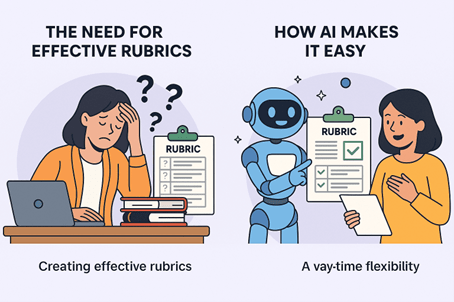
Students ask the AI to explain assessment rubrics and to compare its interpretations with the teacher’s intent.
Interpreting Assessment Criteria with AI (Europe, Malaysia)
Focus: assessment literacy, transparency, student agency.
11. Ethical Boundary Testing
Where the AI idea is applied: AI becomes an object of critique rather than a helper.
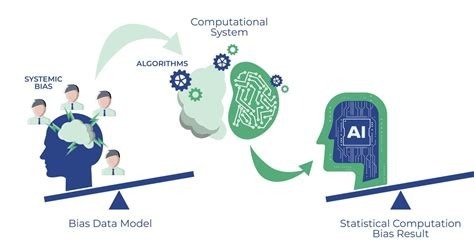
Exploring Bias and Failure Modes (Netherlands, China)
Students deliberately prompt AI to generate biased, incomplete, or ethically problematic outputs and analyse the reasons for these failures.
Focus: ethics, bias awareness, responsible AI use.
12. Curriculum and Lesson Design (Teacher Education)
Where the AI idea is applied: AI supports design ideation, while humans judge educational validity.
Course and Lesson Design Studios (Europe, Indonesia)
Students or trainee teachers use AI to propose alternative course structures, learning outcomes, or lesson plans and evaluate pedagogical quality.
Focus: curriculum literacy, pedagogical reasoning, design thinking.

3. The AI Assessment Scale provides guidance how to assess students who have applied AI tools


